Aerial view of villages burned and spared .
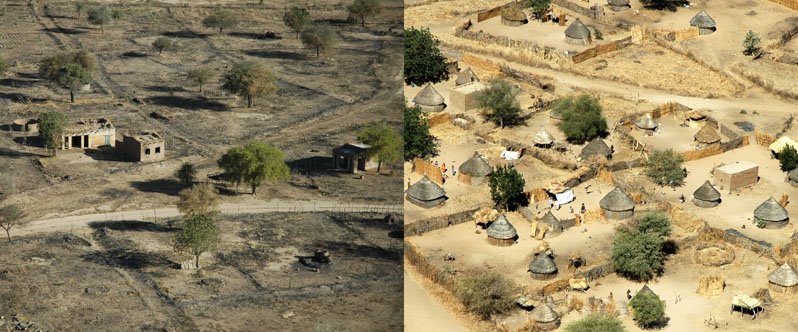 ..
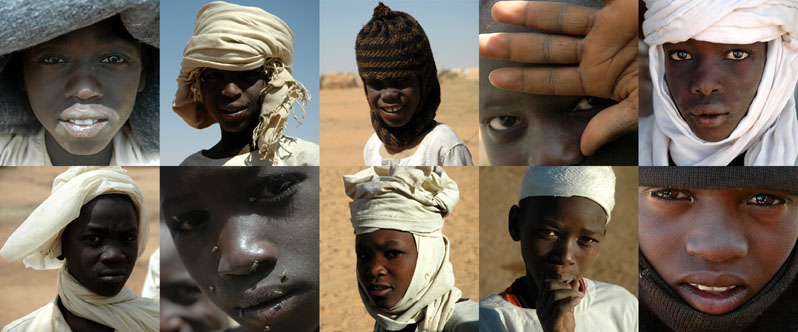
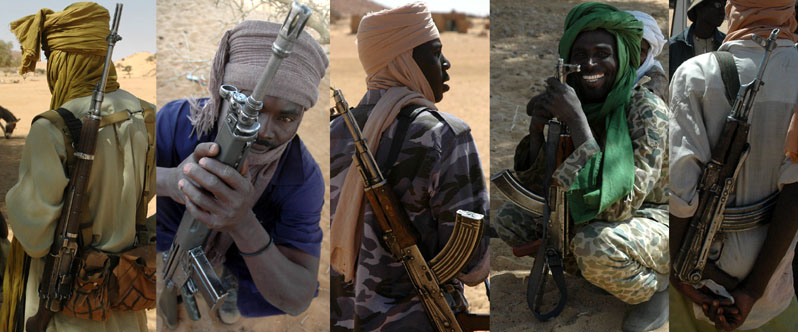
Faces of assorted combatants...

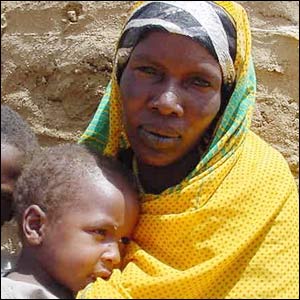
The emptiness of Darfur and the vulnerability of its inhabitants...
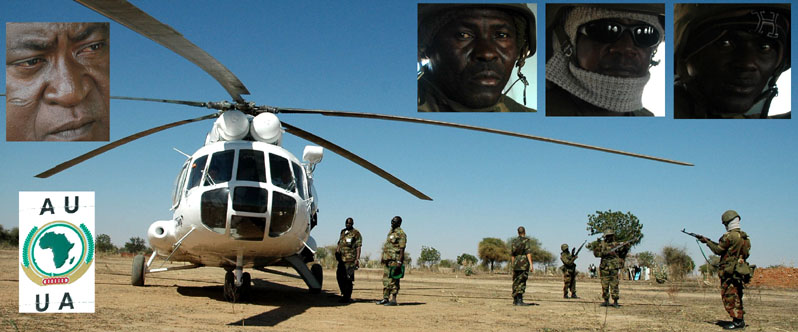
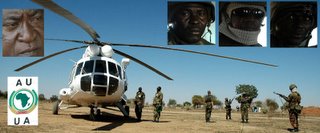
The AU forces scheduled to leave end September...
.. The politically-charged and potentially lethal business of putting an exact figure of the number of victims in Darfur has raised its head again. Reuters just ran a story on some new mortality figures released in the academic journal Science, in an article called "Death in Darfur."
 From today's NY Times:

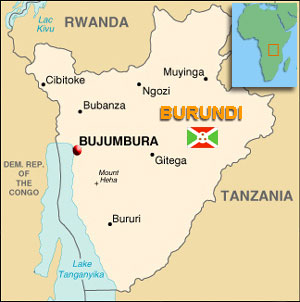
 A lot is happening in Burundi these days. At least, recent events are offering some respite from the daily grind of poverty, joblessness, mind-numbing hunger, the pageantry of inept and paranoid politicians, a muzzled press... the list of untold joys goes on.
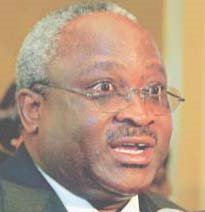 Inside the ruling party, the CNDD-FDD--which portrays itself as a popular movement addressing the needs of the poor--fissures of discontent are beginning to show, hopefully resulting in better governance for Burundians. On Monday, in a clear vote of no-confidence that initially frightened then emboldened my Burundian colleagues, Vice-President Alice Nzomukunda resigned over corruption and human rights abuses that she claimed are hampering the nation's progress. The move was initially worrisome because of the 'sky is falling' reactions it triggered in this nation of hardened political skeptics. After the dust settled, however, political commentators and commoners alike were expressing support for the resignation as the first official recognition of the administration's illegitimacy.
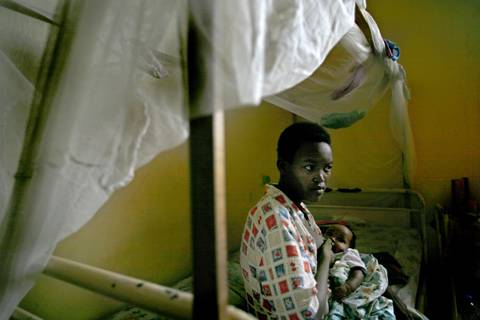
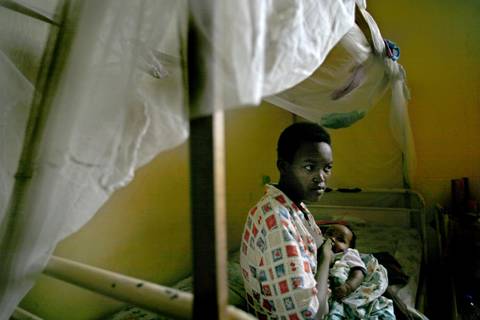 A young mother and her newborn baby, detained at Prince Louis Rwagasore Clinic in Bujumbura following a caesarean section.
 Burundi's newly minted leaders celebrated their first anniversary in power last week here in Bujumbura with long-winded speeches at a reception for the diplomatic community. Despite clear blue skies and warm breezes off Lake Tanganyika, there was little to celebrate. With the harsh return of political intolerance and repression in recent weeks, Burundians again face an uncertain future despite a near end of over a decade of vicious civil war.
 In an excellent editorial by, I'm assuming, Sebastian Mallaby in this morning's Washington Post, the obstacles facing the much debated and awaited UN re-hatting of AU peacekeepers in Darfur are laid bare. People unfamiliar with the internal politics and divergent loyalties of Security Council Member states tend to blame the Darfur tragedy on 'Western inaction' or 'Khartoum intransigency'. Both are true, but amount to blaming today's weather on 'the weather' -- a finer tautology could not be found.
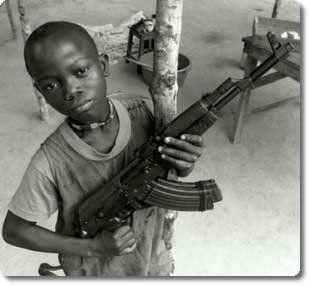
 Burundi is one of the countries specifically targeted by UN Security Council Resolution 1612 banning the recruitment and use of child soldiers. The country's long history of internal conflict saw at one point as many as 19 different factions, most of them armed and militarily engaged. It has significantly pacified since national elections in 2005 even though one rebel group refuses to disarm/disband (FNL). Shelling onto Bujumbura, the capital, remains periodic and UN peacekeepers are deployed across the country.
 Chad broke diplomatic relations with Sudan on April 15 after anti-government rebels allegedly based in Sudan and Central African Republic launched a deadly attack on the Chadian capital N'djamena. Sudan has denied Chad's claims that it supports the rebels in its territory and said Chad is sponsoring rebel groups aligned with Deby's ethnic group, the Zaghawa, which have been fighting the Sudanese army. On July 26 Chad and Sudan signed an agreement in N'djamena aimed at normalising relations, in a reunion orchestrated by Libyan leader Moamer Kadhafi (see his website).
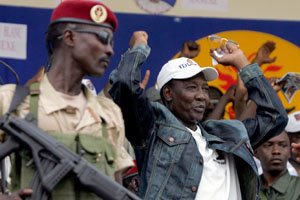
The detente comes as the Darfur crisis on both sides of the Chad-Sudan border continues to deteriorate. On the Sudan side, eight Sudanese aid workers were killed in July as Khartoum signed a peace agreement with the Sudanese Liberation Army (SLA). In eastern Chad, where over 213,000 Darfuri refugees are camped, attacks continue by Janjawid militants against refugees and aid workers. The instability makes the continued provision of aid extremely precarious for foreign aid workers, whose presence ensures a degree of protection for the refugees, who are the primary target. UNHCR and other aid agencies have denounced these attacks, but Deby's national army has no control over this part of the country.
[Bleak life in eastern Chad]
 A July report by the Geneva-based Small Arms Survey (SAS) on the understudied Central African Republic (CAR) reiterates the fragile volatility of this land-locked, often overlooked nation. Despite having hosted four international peacekeeping missions in the last ten years, the civil wars and humanitarian disasters in neighboring countries (Chad, Sudan, Niger, DR Congo) routinely make headlines while CAR remains an unknown quantity to the outside world. My personal theory, not entirely facetious, is that the country needs a more memorable name, one that sounds less like an airport parking lot.

 As most of you know, I've been working with child soldiers in the DR Congo most of this year. My focus has been on evaluating programs run by the usual aid agencies: UNICEF, Save the Children, International Rescue Committee, the Red Cross network, and a host of smaller Congolese groups. These actors are funded by tax revenues and private donations from people in developed countries, so directly or indirectly, you and I are paying for them. Such evaluations provide accountability to donors that they're getting what they paid for. Anyone who says international aid is unaccountable is simply uninformed.
 I most appreciated Singer's historical account of how the child soldier doctrine came about in the first place. He also relates the malignancy of metastasized statelessness where groups using child soldiers become havens for global terrorism. A case in point is Charles Taylor's Liberia exchanging its gold and diamonds with Al Qaeda operatives who needed to 'go light' and drop millions in cash.
 If Congo's tenuous order does unravel into widespread violence in the wake of national elections last Sunday, the resulting strife will no doubt be due to the uncivil rumblings of presidential candidates incapable of accepting 'the voice of the people'.
 RCD-G led a brutal regime throughout the war (1998-2003) in which civilians were regularly targeted as suspected collaborators with 'the enemy'. War crimes in the form of civilian massacres directed by its core military leaders have been documented by Human Rights Watch, yet these men walk free. Their reign of terror and fear crippled the local economy by paralyzing movement within their territory, which constituted more than a third of the country at the time. I spent hours, sometimes days, in front of RCD officials and soldiers at borders, airports and road checkpoints, waiting out their demands for bribes and accusations of espionage. I never landed in jail, but always came away from RCD encounters a few pounds lighter, once they'd 'relieved' me of any bags, documents or communications equipment I was traveling with. Ruberwa and his gang of knuckle-dragging thugs hold a special place in my heart.
 In what looks to be a tale well-told, a former Africa writer for The Economist, Adam Roberts, just published his account of the thwarted coup attempt in March 2004 of Obiang Nguema Mbasogo, president-for-life of Equatorial Guinea, the microscopic oil-rich nation in West Africa. Margaret Thatcher's son Mark, a South Africa resident close to founders of the now defunct private security firm Executive Outcomes, helped bankroll the effort and was fined but not indicted. A number of veteran African mercenaries involved with the plot were captured and sentenced in Zimbabwe, from where the coup was organized.
The Wonga Coup was favorably reviewed last week in WSJ. Like many book reviews, it may prove a more interesting read than the book itself. Robert Kaplan opens the review with the question that has crossed anyone's mind who has ever wondered how modern-day Africa has sunk to its current depths:
"The question is perennial: What is wrong with Africa? Why does a continent rich in natural resources, blessed with plenty of space, populated by plenty of young people, and positioned at the confluence of Asian and European trade routes fail so abysmally to "take off" and provide something better than a dollar a day for its inhabitants?"
I'll be reading this one at some point, regardless, as it appears to offer a close account of an abiding aspect of contemporary African failure, governance and its persistant undermining by short-term greed. Kaplan concludes,
"The most encouraging aspect of "The Wonga Coup" is its portrait of South Africa and Zimbabwe (notwithstanding the Mugabe regime's own arbitrary abuses at home) coming down hard on Mr. Mann and his coup-plotting cronies. Perhaps such a leap into action, thwarting nearby wrongdoing, is a harbinger of change for Africa. Still, it says something about Africa's wobbly governance that the conspirators felt confident enough to take their plan beyond a barstool daydream."


 I first met Bemba in 2004 at an anti-corruption conference organized by an American NGO I was working for at the time. As I shook his hand, I noted with disappointment that he was like everyone else I had ever met in Congo's political class: he refused to look me in the eye. I also noted that my head would fit into either of his massive bear claws, perhaps the source of my obvious insignificance in his eyes. Bemba is also an ultra-rich international businessman, and I'm a poor aid worker he would happily wipe his rear end with, given the chance. In any event, he didnt show me the respect befitting a fellow ant, nor did he inspire me to mobilize on his behalf. Instead I cursed and argued with his simian bodyguards when they tried to steal the crates of beer we provided for the conference reception.
 Joseph Kabila, the president of the current transitional government, will probably win. The international community appears to back him. The national honeymoon will last six to nine months. By which time, if little or nothing has changed, popular unrest will raise the temperature a few degrees. If the military havent been paid either, the proverbial shit will hit the proverbial fan. An unstable Congo will continue to drag its neighbors into the mire, and further undermine Central Africa's potential to become an economic powerhouse capable of leading development across the continent.
 Amazingly, the normally anodyne Time magazine (US version) reported with surprising insight on Congo's "Deadliest War in the World" for its June 6 issue. The article is worth reading in its entirety , but this outtake encapsulates Congo's hope, tragedy, and our regretful status as unmoved onlookers:
 ...is had by the average canine. During my recent trip to DR Congo, many of the former child soldiers I met--dogs of war in their own right--had caught whiff of certain unseemlies issuing from aid efforts designed to help them escape armed groups and reclaim their civilian childhood. By the time I met them, they had been disarmed, released and were on their way back to the village. Things were fairly rosy compared to their former lives as armed packmules and cannon fodder. Now naked without their guns, they were still a surly lot, clearly used to lording over anyone in their vicinity. Even without their weapons, their wolf-pack behavior continued. I watched the group dynamic as they banded together against an outsider or perceived threat. Alternately, when the coast was clear, they would snarl and turn on each other: teasing, abusing, dominating or being dominated. A de-militarized mind was still a long way off.
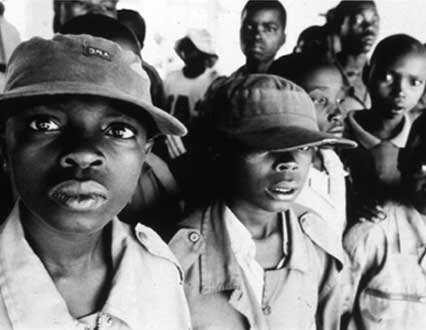 Programs to disarm, demobilize and reintegrate child soldiers (the DDR process) are more than a military and security measure in the post-conflict stabilization process of nations such as the DR Congo. More importantly, the programs serve to reconnect former child soldiers with their families and communities, to rehabilitate individual lives and to reweave the social fabric as positive foundations are laid for the future. To succeed, each of the three phases of child DDR must be executed in a timely and coordinated fashion. As in other African countries where large child DDR programs have been realized, the greatest obstacles to lasting achievements in the DRC lie beyond the scope of the implementing agencies themselves. These obstacles include ongoing conflict and political uncertainty, a deeply fractured socio-cultural sphere and a barren national economy. This scenario is further complicated by a thoroughly destroyed national infrastructure.
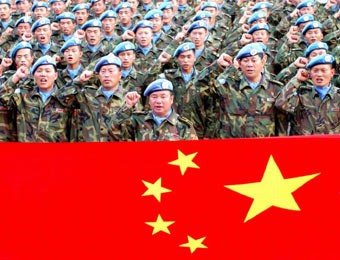 Unsurprisingly, perhaps, the country making the greatest inroads into African economic development and resource extraction, the People's Republic of China, does not consider itself a member of the 'international community' regarding African affairs. 'Bullied and manipulated' by the West, China sees in Africa a trading partner and fellow developing country. [see report]. Unlike the West, it attaches no strings or conditions regarding 'good

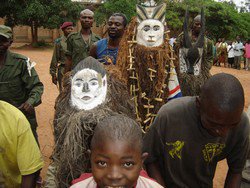 Older kids serve as spies, porters or are sent to the front as cannon fodder. By the time we meet them in these transit centers they are often traumatized with extreme ADD. They are aggressive at first, sometimes fighting amongst themselves or banding together to smash windows and break furniture at the transit center. In some centers we've visited, children have taken their caretakers hostage, demanding money, goods or immediate release. Rape of younger boys by older ones is sometimes reported by staff; children re-enact the brutal heirarchies of their former military existence because it is more familiar to them than civilian or family life.
 I was in Congo much of November 2005 to evaluate the success of various aid projects to 'support the political transition' at the community level. I will return this week to begin looking at international efforts to rehabilitate former child soldiers, or 'kadogos' as they're called in Congo. Congo's national elections will be soon upon us, after three years of largely unsatisfactory transitional government. What follows are some thoughts on how aid projects funded by the international community can engage this negative dynamic in support of a more promising transition, credible national elections in April and a serious start at legitimate governance for the victorious party.
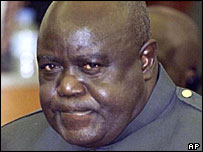
 The Congolese transition has been characterized by a high level of institutional dysfunction and a paucity of achievements. Although the government, parliament and military hierarchy were installed by September 2003, most of the “support institutions to democracy” took much longer to become operational, in part because of the government’s failure to adopt the necessary legal texts. The quest for personal enrichment by members of the various transition institutions has triggered widespread reciprocal suspicion among them has made it all but impossible to establish functional cooperation among the different organs of the state.
 Many aid agencies seem to assume that the transition will succeed and the State will pick up and resume the work of stabilizing the country and rehabilitating essential public services. Unfortunately, this is not likely to happen, and the Congolese know it. Because so many aid operations avoid the messy work of directly involving state officials and transition institutions in their relief activities, the problem is compounded. International aid subsitutes for the work of the state, and thus risks triggering a legitimation crisis for the state -- not necessarily a bad thing if it could lead to better governance. What it usually leads to are militant crackdowns and more brazen theft of public funds and resources by political elites.
 The CFR program ‘opened minds’, or so many participants enthusiastically claimed. Political support and votes can no longer be bought, they told me; similarly, many youth claimed to be less susceptible to political manipulation and violence. When asked about national elections, they all responded: “What have these candidates done to earn our votes?” After nearly two years of this particular CFR program, worth millions of dollars, the behavior and instincts of the political class are unchanged; only voters have evolved. The common sentiment is that the poor are constantly subjected to bad governance, but are not given the means to change it. While this may constitute increased awareness of the political transition, it does not come with the desired component of popular empowerment.
 On a very different note: the old Zaire/MPR flag is still my favorite, despite its association with tyranny and megalomania. What other national flag can boast a human appendage brandishing a flaming torch? Far more declarative than the usual combination of stars, swaths and stripes.
 One of Africa's most important experiments--African troops providing security in African conflicts--looks slated for premature burial. The current African Union peacekeeping Mission in Sudan (AMIS), with close to 7,000 troops and operating expenses of more than US $17 million a month, cannot be sustained beyond March without further financial support, its leaders reported recently. The need for effective peacekeeping in Darfur is dire, with some 139 ceasefire violations committed since May 2005, by parties to the conflict. Five African peacekeepers and two civilian staff were killed by unknown gunmen in the last four months. Banditry and attacks against aid workers have also increased.
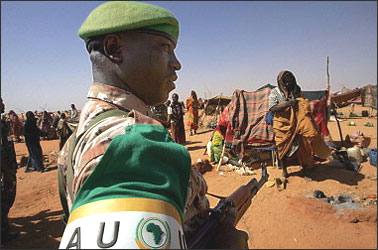 By any measure, Darfur was not the easiest site to road-test AU peacekeeping prowess. (A shortlived peacekeeping mission in Burundi preceded events in Darfur. Composed entirely of South African troops and materiel, however, it was the AU's 'first mission' in name only). Since arriving in Darfur in mid-2004, AMIS has had some success in reducing insecurity for civilians through its limited presence and reporting. The viciousness and intractability of the conflict, however, has since exceeded AU capacity.